AGRICULTURAL FINANCE
Improving an Enterprise Portal Experience
Overview
Enterprise portals used for financial and lending operations must translate complex business requirements into interfaces that support clear, consistent workflows. Achieving this requires more than visual design: it calls for careful analysis of use cases, collaboration with business stakeholders, and alignment with established interface standards.
In this engagement, I contributed to the usability analysis and user-interface redesign of an internal enterprise portal for a Canadian agricultural finance organisation. My work connected use-case reviews and design decisions with the practical needs of business analysts, designers, project managers, and developers working across locations.
The challenge
The engagement involved translating business and functional use cases into workable interface designs for an enterprise lending environment.
Several challenges shaped the work. The use-case documentation required an understanding of financial and lending concepts. Design decisions also needed to be coordinated across the client team and an offshore delivery team in India, making clear communication and structured walkthroughs important.
Additionally, the portal redesign was being developed without existing screens to use as a baseline for feedback. The interface therefore had to be designed from the requirements and use cases, rather than refined through comparisons with an established design.
The task was to help bridge the gap between documented requirements and usable interface solutions while maintaining consistency with the portal’s internal UI standards.
My role
My contribution centred on usability reviews, interface design, and design coordination. I participated in reviews of use cases with the client’s design team, translated insights into interface concepts and detailed designs, and conducted walkthroughs with the offshore delivery team.
The role required me to work across business analysis and design, helping ensure that interface decisions remained grounded in the intended tasks while being communicated clearly enough to support implementation.
Engagement approach
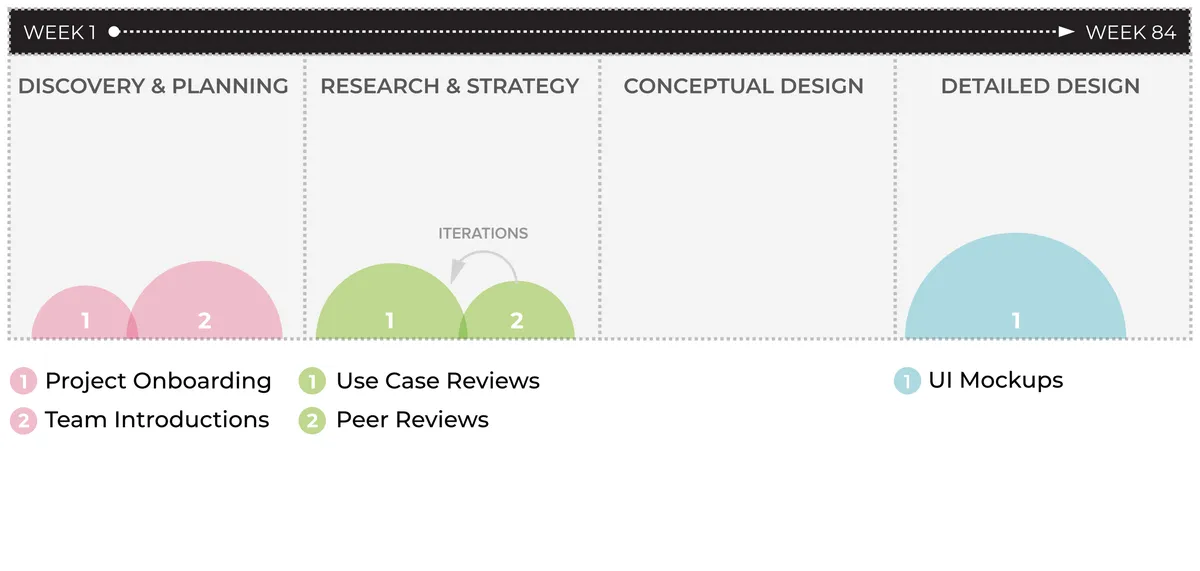
Figure 1. Process overview for the enterprise portal usability analysis and UI redesign engagement.
The work began with reviewing and discussing use cases with the client team. Voice-recorded discussions, brainstorming, and collaborative reviews helped surface the intent behind the requirements and clarify how they should translate into interface behaviour.
I then used sketches to communicate design decisions to business analysts and the client’s designers before progressing to detailed interface work in Photoshop. This sequence allowed design concepts to be discussed before investing effort in more detailed screens.
Walkthroughs with the offshore team helped communicate the reasoning behind the proposed designs and supported coordination across the delivery process. Throughout the work, the interface designs were checked against the portal’s existing UI standards.
From use cases to interface design
A central part of the engagement was turning requirements into interface decisions that could be understood by both business stakeholders and the delivery team.
This involved interpreting use cases in their financial and lending context, considering the controls needed to support the intended tasks, and refining the interface based on the analysis. Sketches provided an intermediate representation between requirements and detailed design, making it easier to communicate design intent before production work progressed.
The approach also connected usability analysis with design consistency. Rather than treating each screen as an isolated output, the work considered how the proposed interface should align with the internal portal’s standards.
Deliverables and strategic significance
The documented work included use-case usability reviews, interface sketches, detailed UI designs, and walkthroughs to support coordination with the offshore team.
The engagement illustrates the importance of connecting requirements analysis, usability considerations, and interface design in enterprise environments. It also demonstrates how design communication becomes a practical delivery tool when stakeholders and implementation teams work across locations.
The case does not establish quantified improvements in efficiency, adoption, or business performance. Its significance lies in the structured process used to translate complex use cases into implementable interface designs while maintaining alignment between business requirements, design decisions, and internal UI standards.
Explore other case studies →
AEROSPACE & TECHNOLOGY
CONSUMER GOODS & MANUFACTURING
FINANCIAL SERVICES
PHARMACY & HEALTHCARE
RETAIL PHARMACY
SUPPLY CHAIN & LOGISTICS
TELECOMMUNICATIONS
TELECOMMUNICATIONS