CONSUMER GOODS AND MANUFACTURING
Evaluating Regulatory Readiness for a New Product
Overview
When a consumer goods manufacturer explored entering the hand sanitiser market, the opportunity involved more than repurposing production capacity. The business needed to understand the regulatory requirements, operational implications, and potential costs associated with manufacturing at scale.
I conducted research and analysis to help assess the requirements for Good Manufacturing Practices (GMP) in Canada and the United States. The engagement focused on comparing regulatory expectations, examining the implications of establishing a production facility in the US, and translating complex requirements into a practical overview for business decision-making.
The work connected regulatory research with commercial considerations, helping clarify the challenges that needed to be understood before moving forward.
The challenge
The manufacturer was considering a new product category during the COVID-19 pandemic, when demand for hand sanitiser created an opportunity to use existing manufacturing capabilities in a different way.
However, entering this market required an understanding of the applicable regulatory environment and the implications of sustained production. The challenge was not simply to identify the regulations, but to organise the requirements into a form that could support practical assessment and planning.
Three considerations shaped the engagement:
- Regulatory complexity: Understanding and comparing GMP requirements across Canada and the United States, including the relevant US FDA regulations and Health Canada requirements.
- Operational and financial implications: Developing a high-level view of the costs and risks associated with establishing a drug-product manufacturing facility in the United States.
- Practical interpretation: Converting formal regulatory language into clear, actionable considerations that business stakeholders could review and use.
These considerations needed to be examined together to provide a more complete picture of the opportunity and its potential constraints.
My role
I led the research and analytical work required to assess regulatory readiness and support the manufacturer's evaluation of the opportunity.
My responsibilities included:
- Reviewing and comparing relevant GMP requirements in Canada and the United States.
- Organising regulatory requirements into a structured assessment.
- Conducting competitor and market research across both countries.
- Preparing a high-level assessment of the costs associated with establishing a hand sanitiser production facility in the United States.
- Translating complex regulatory material into a practical checklist and summary for business stakeholders.
The focus was on making a complex body of information easier to navigate without losing sight of the requirements and decisions involved.
Engagement approach
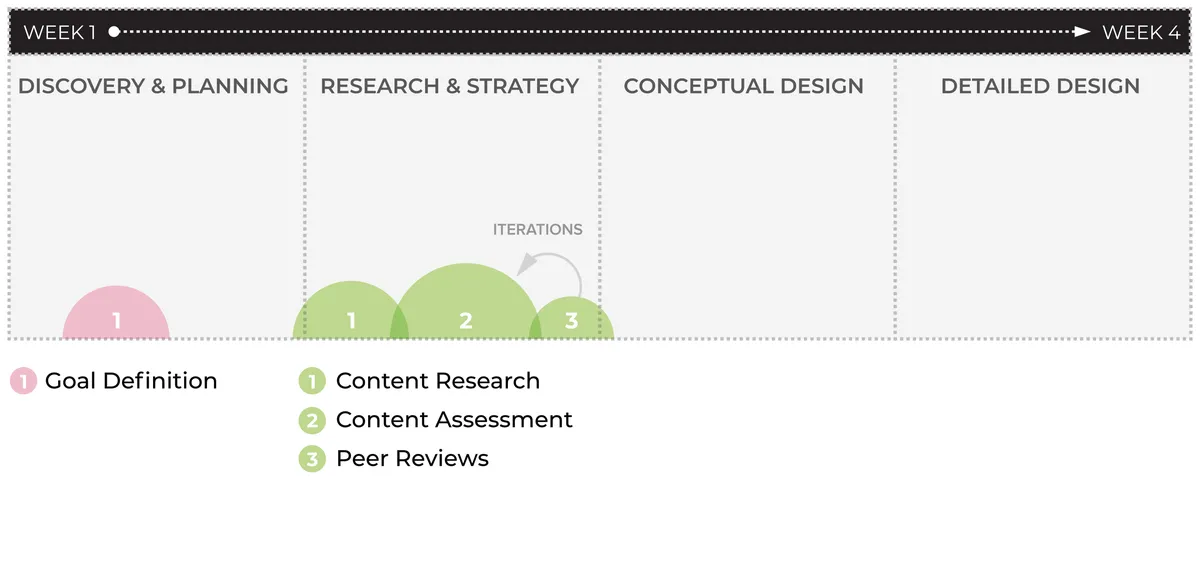
Engagement process: defining the goal, researching and assessing regulatory content, and refining the findings through peer review over a four-week timeline.
1. Define the assessment goal
The first step was to establish the scope of the research around the requirements for manufacturing hand sanitiser and the considerations involved in entering the market. This provided a basis for comparing regulatory expectations and examining the broader operational implications.
2. Research and compare regulatory requirements
I conducted an item-by-item review of US FDA Code of Federal Regulations, Title 21, current Good Manufacturing Practice requirements. The analysis covered 158 regulatory provisions across ten areas, with the findings cross-checked against relevant Health Canada GMP requirements for natural health products.
The comparison helped organise the requirements into a more accessible structure, making it easier to examine similarities, differences, and areas requiring further consideration.
3. Assess the business context
Regulatory research was complemented by competitor analysis in the Canadian and US markets. I also prepared a high-level cost assessment for establishing a hand sanitiser production facility in the United States.
This extended the work beyond regulatory comparison to consider the wider commercial and operational questions associated with the proposed opportunity.
4. Consolidate the findings
The research was consolidated into a user-friendly checklist and summary of key requirements and considerations. The objective was to turn detailed, formal documentation into a practical reference that could help stakeholders understand the scope of the work involved.
Deliverables and strategic significance
The engagement produced a structured overview of regulatory requirements and business considerations for evaluating the proposed product opportunity.
Key deliverables included:
- Comparative GMP assessment: An item-by-item review of relevant US requirements and a comparison with applicable Canadian requirements.
- Regulatory checklist: A practical summary of key requirements to help stakeholders navigate the compliance landscape.
- Market and competitor research: An assessment of the Canadian and US market context.
- High-level cost assessment: An initial view of the cost considerations associated with establishing a production facility in the United States.
The principal value was the translation of complex regulatory material into information that could support business assessment and planning. Rather than leaving stakeholders to interpret extensive regulatory documentation independently, the work provided a more structured view of the requirements, risks, and questions associated with the opportunity.
This engagement illustrates how research and structured analysis can help bridge the gap between regulatory complexity and business decision-making. It also demonstrates the value of making specialised information understandable and actionable when an organisation is evaluating a new product category.
The assessment was intended to inform planning; it should not be interpreted as regulatory approval, a certification of compliance, or confirmation that the proposed facility was established.
Explore other case studies →
AEROSPACE & TECHNOLOGY
AGRICULTURAL FINANCE
FINANCIAL SERVICES
PHARMACY & HEALTHCARE
RETAIL PHARMACY
SUPPLY CHAIN & LOGISTICS
TELECOMMUNICATIONS
TELECOMMUNICATIONS